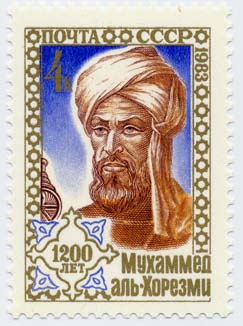
 Muhammad ibn Al-Khwarizmi, 780-850 |
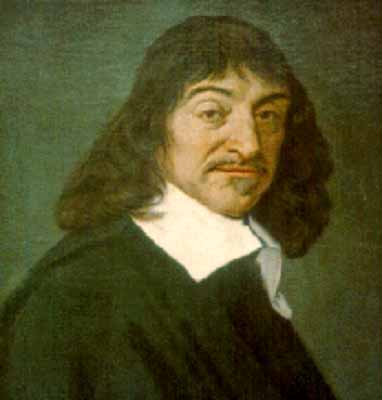 René Descartes, 1596-1650 |
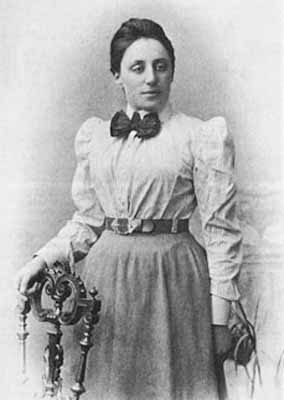 Emmy Noether, 1882-1935 |
Muhammad ibn Al-Khwarizmi, 780-850 |
René Descartes, 1596-1650 |
Emmy Noether, 1882-1935 |
COURSE NUMBER: MATH 1710-002
TIME: 12:45-2:05 TR; PLACE: Warf-Pickel 308; CALL# 83109
INSTRUCTOR: Robert "Dr. Bob" Gardner; OFFICE: Room 308F of Gilbreath Hall
OFFICE HOURS: 3:35-4:00 TR and by appointment; PHONE: 439-6979 (Math Office 439-4349)
E-MAIL: gardnerr@etsu.edu
WEBPAGE: www.etsu.edu/math/gardner/gardner.htm.
ASSISTANT: The graduate assistant for this class is Gaffar Solihu. Mr. Solihu will grade the tests and be available in Gilbreath 308T on Tuesdays from 11:30 to 12:30 for his office hours (his office phone number is 423-439-6982 and his e-mail is solihu@etsu.edu). He will also be available for one-on-one help in the Center for Academic Achievement (CFAA) at a time to be announced. Other qualified graduate students will also be available in the CFAA.
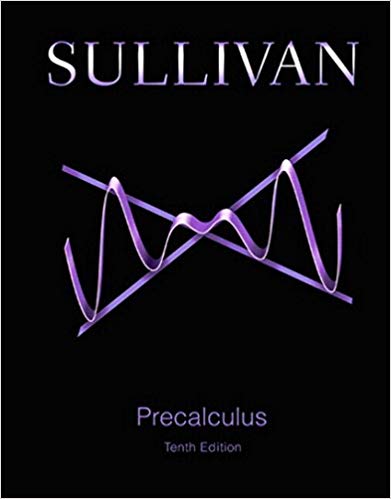
TEXT: Precalculus, 10th Edition, by Michael Sullivan (Pearson, 2016).
PREREQUISITE: Two years of high school algebra (the formal prerequisite). The realistic prerequisite is a working knowledge of the material in the appendix sections of the text book of A.1 (Algebra Essentials), A.3 (Polynomials), A.5 (Rational Expressions), A.6 (Solving Equations), A.9 (Interval Notation; Solving Inequalities), and A.10 (nth Roots; Rational Exponents).
DIAGNOSTIC TEST: From Monday, August 26, through Thursday, September 5 you will have the opportunity to take a multiple-choice diagnostic test in the Testing Center (located on the first floor of ETSU's Sherrod Library in the Center for Academic Achievement). If you score 70% or higher, you will be given the choice to drop this class and move into a Precalculus 2 (Trigonometry) class (MATH 1720). The diagnostic test is multiple choice, no calculator is allowed when taking the test, and it covers material from Precalculus 1 (Algebra).
DESIRE2LEARN: I will not rely on the Desire2Learn ("D2L") website. Instead, I will simply post all material directly on the internet. However, I will post your grades on D2L and I have created a discussion forum for each section of the book and each test. You can discuss particular problems on D2L and I, along with my assistant, will monitor these discussions and contribute as needed.
CENTER FOR ACADEMIC ACHIEVEMENT: Located on the first floor of the Sherrod Library, the Center for Academic Achievement (CFAA) is the place to go for help with writing and speaking, library research, core math and science courses, and other subjects. The center offers tutoring on a walk-in and appointment basis and is open during library hours, including nights and weekends. For more information, call 439-7115 or go to the CFAA website.
MyMathLab: MyMathLab is software provided by the publisher of the textbook. It comes with eText (a digital copy of the text book), animations, videos, exercises selected by the text book author, and skill review quizzes. You must purchase an access code to use MyMathLab. We will not use this resource formally in the course, but feel free to use it for additional help as you see fit.
SULLIVAN'S PRECALCULUS YOUTUBE CHANNEL: There is a YouTube Channel for Sullivan's Precalculus, 10th edition. Click on the "Playlist" button to link to Chapter Test Prep Videos for each chapter. These gives you exposure to extra worked examples, but the presentations lack the level of written explanation you will be expected to give on the tests.
CLASS NOTES: We will use projected digital notes for the presentation of definitions, examples, and statements of some theorem. The white board will be used for marginal notes and additional examples and explanation. Copies of the notes are online. It is strongly recommended that you get printed copies of the overheads before the material is covered in class. This will save you from writing down most notes in class and you can concentrate on listening and supplementing the notes and examples with comments which you find relevant. You should read the online notes to be covered in class before each class (we will not have class time to cover everything in the notes; they are very thorough). Try to understand the examples and the meanings of the definitions. You should also read each relevant section of the book, paying particular attention to examples.
ABOUT THE COURSE: Though the title of the course is "Precalculus 1 (Algebra)," we will cover material traditionally covered in a college algebra class. This material is normally covered in 9th grade (Algebra 1) and part of 11th grade (Algebra 2) high school courses. However, this should not lull you into a false sense of security! The material is tricky and requires the utmost attention to detail! DO NOT make up your own rules or write things which are incorrect. If you think you have found a shortcut that we have not discussed, then BEWARE! The instructor will work problems in the easiest way possible and if you have discovered some quick, clever shortcut it is probably wrong! DO show all work and all steps to each problem (and, of course, use equal signs when needed). In this way, you may get partial credit for an answer which is ultimately wrong (assuming that your reasoning is basically sound).
OUTLINE:
Our tentative outline is:
Chapter 1. Graphs: Distance formula, midpoint formula, graphing points, intercepts, symmetry with respect to an axis or the origin, slope of a line, graphing lines, vertical lines, Point-Slope Form of a line, Slope-Intercept Form of a line, General Form of a line, parallel lines, perpendicular lines, center and radius of a circle, standard form of a circle, graphing circles.
Chapter 2. Functions and Their Graphs: Function, difference quotient of a function, domain of a function, sum and difference and product and quotient of two functions, graphs of functions, even/odd function, increasing/decreasing functions, local and absolute maxima/minima of a function, average rate of change of a function, the "Library of Functions," piecewise-defined functions, transformations and reflections of graphs of functions, building and analyzing functions.
Chapter 3. Linear and Quadratic Functions: Graph linear functions, average rate of change of linear functions, increasing/decreasing linear functions, graph quadratic functions, the vertex and axis of symmetry of a quadratic function, maximum/minimum of a quadratic function, building quadratic models, inequalities involving quadratic functions.
Chapter 4. Polynomial and Rational Functions: Degree of a polynomial function, graphing polynomial function, domain of rational functions, vertical asymptotes of rational functions, horizontal and oblique asymptotes of rational functions, graphing rational functions, polynomial and rational inequalities, the Remainder and Factor Theorems, Descartes' Rule of Signs, rational zeros of a polynomial function, real zeros of a polynomial function, Intermediate Value Theorem.
Chapter 5. Exponential and Logarithmic Functions: Composite functions, one-to-one functions, inverse functions, graphing an inverse function, finding an inverse function, exponential functions, the number e, exponential equations, interchanging logarithmic and exponential statements, evaluating logarithmic expressions, domains and graphs of logarithmic functions, logarithmic and exponential equations, exponential growth and decay, population models, Newton's Law of Cooling, logistic models.
GRADING: We will have four tests (T1 - T4) and a comprehensive final (F). Your average will be computed as follows:
TESTS AND HOMEWORK: On each regular test you will be given the opportunity to earn up to 10% bonus points. These bonus points will be based on how well you write your solutions. In particular, if you write in complete, gramatically correct sentences and explain your answer, you will get the bonus credit. The purpose of this approach is to train you to communicate technical information clearly (a skill that may take you far and streamline your math education experience!). Other than this, there are no "extra credit" opportunities. There will be no use of calculators on the tests (this is a math class)! This is good news, since you will not be given messy numbers on the test. In class, we may deal with messy numbers (and occasionally calculators). A list is given below of day-by-day homework ("HW") assignments. These will not be taken up or graded. These assignments are to help you understand the ideas and how to work the problems so that you are ready for the in-class tests (on which your grade is based, as explained above). We will discuss the assigned homework problems (and, if there is a request, unassigned problems) during class as time permits. If you want to discuss particular problems in more detail, then please make an appointment with Dr. Bob or his assistant; you can also visit the Center for Academic Achievement for help. The HW problems are broken into two categories: (1) Understanding/Vocabulary and (2) Exercises. We will put priority on the "Exercises" since these are the types of questions on which you will be tested.
TEST SOLUTIONS: Solutions to each test will be posted after the test is given:
SYLLABUS ATTACHMENT: You can find an on-line version of the university's syllabus attachment (which contains general information concerning advisement, honor codes, dropping, etc.; last accessed 6/29/2019).
IMPORTANT DATES: (see the official ETSU calendar for more details; accessed 6/29/2019):
OUR TENTATIVE SCHEDULE. Our day-by-day schedule is as follows. Changes to the original planned schedule are in red fonts.
1.1: The Distance and Midpoint Formulas 1.2: Graphs of Equations in Two Variables; Intercepts; Symmetry |
1.2: 1-11 (odd) |
1.2: 13-81 (EOO) |
|
2.1: Functions |
2.1: 1-17 odd |
2.1: 21-133 (EOO) |
|
2.2: The Graph of a Function |
2.2: 1-9 (odd) |
2.2:11, 13-37 (EOO) |
|
Review |
|||
2.6: Mathematical Models: Building Functions |
2.6: - |
2.6: 1-25 (EOO, excluding the calculator exercises) |
|
Review |
|||
3.5: Inequalities Involving Quadratic Functions |
3.5: - |
3.5: 5-37 (EOO) |
|
4.1: Polynomial Functions and Models |
4.1: 1.15 odd |
4.1: 17-95 (EOO) |
|
4.3: The Graph of a Rational Function |
4.3: 1-5 odd |
4.3: 9-61 (EOO, excluding calculator exercises) |
|
4.4: Polynomial and Rational Inequalities |
4.4: 1-3 odd |
4.4: 5-77 (EOO) |
|
Review |
|||
5.1: Composite Functions |
5.1: 1-7 odd |
5.1: 9-73 (EOO) |
|
5.4: Logarithmic Functions |
5.4: 1-9 odd |
5.4: 13-125 (EOO) |
|
5.5: Properties of Logarithms |
5.5: 1-11 odd |
5.5: 13-109 (EOO) |
|
Review |
|||
5.8: Exponential Growth and Decay Models; Newton's Law; Logistic Growth and Decay Models |
5.8: - |
5.8: 1-29 (EOO) |
|
Review |
|||
Return to Dr. Bob's webpage
Last updated: September 14, 2019.