Introduction to Modern Geometry - Spring 2026 DRAFT
Images accessed 10/21/2025
COURSE: MATH 4157/5157
TIME: 2:55-4:15 TR, PLACE: Gilbreath 104
INSTRUCTOR: Robert "Dr. Bob" Gardner; OFFICE: Room 308F of Gilbreath Hall
OFFICE HOURS: 4:15-4:45 TR and by appointment; PHONE: 439-6979 (Math Office 439-4349)
E-MAIL: gardnerr@etsu.edu
WEBPAGE: Dr. Bob's faculty webpage
(see my webpage for a copy of this course syllabus, copies of the classnotes in PDF, and updates for the course).
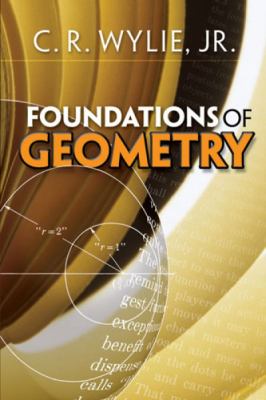
TEXT: Foundations of Geometry, C. R. Wylie, Jr. (McGraw-Hill, 1964; reprinted by Dover Publications, 2009).
PREREQUISITES: Linear Algebra (MATH 2010), and Mathematical Reasoning (MATH 3000).
CLASS NOTES: Online notes are available and the lecture component of the class will be based on these notes.
Limited marginal notes, additional examples, and homework hints will be given using a document camera and handwritten material.
Class notes are online, based on the textbook: Foundations of Geometry. You should read the online notes to be covered in class before each class and try to at least understand the definitions, examples, and the meanings of the theorems.
DESIRE2LEARN: I will not rely on the Desire2Learn ("D2L") website for the posting of notes and supplements; all of this material is freely available on my faculty webpage and does not require a login. I will use D2L to collect homework (in DropBox) and to post your grades, homework solutions, and recordings of class lectures.
ABOUT THE COURSE: The course description as given in the 2024-25 Undergraduate Catalog is: "Introduces Euclidean and non-Euclidean geometries, emphasizing the distinction between the axiomatic characterizations, and the transformational characterizations of these geometries. Some history of the development of the discipline also is included."
The bulk of the class is based on Wylie's Foundations of Geometry, where we consider a modern axiomatic approach to Euclidean geometry and address the non-Euclidean geometry of hyperbolic geometry. This material is in Chapter 1 ("The Axiomatic Method"), Chapter 2 ("Euclidean Geometry"), and Chapter 4 ("Plane Hyperbolic Geometry"). Notes on the history of geometry can be found online at History of Geometry (based on Ostermann and Wanner's Geometry by its History, Undergraduate Texts in Mathematics, Springer 2012). More relevant notes covered in History of Mathematics (MATH 3040) are online on History of Mathematics before 1600 (based somewhat on Eve's An Introduction to the History of Mathematics, 6th edition, Saunders, 1990; these notes include lots of information on the geometry of the classical world) and on History of Mathematics after 1600 (also based on Eves' book; these notes include information on the history of non-Euclidean geometry and the modern approach to geometry). Notes on transformational geometry are online at Axiomatic and Transformational Geometry - Transformational Geometry Class Notes, though it is unlikely that we will have time to explore this topic. I also have notes on projective geometry online at Axiomatic and Transformational - Projective Geometry Class Notes. The topics of tranformational geometry and projective geometry were formerly offered in the ETSU graduate class "Axiomatic and Transformational Geometry" (MATH 5330). The catalog description in the 2014-15 ETSU Graduate Catalog was: "Axiomatic and finite geometries. Euclidean geometry (synthetic/analytic), transformational geometries, non-Euclidean and projective geometries." This class was removed from the catalog in 2015 and some of the topics added to Introduction to Modern Geometry. I also have a few finite geometry notes in preparation online
at Axiomatic and Transformational Geometry Class Notes - Finite Geometry.
GRADING:
Your grade will be determined by the average on a midterm (M), a final (F), and homework (HW).
Your average is determined by:
AVERAGE = (M + F + 3HW)/5,
Grades will be assigned based on a 10 point scale with "plus" and "minus" grades being assigned on a 3 point subscale (for example, a 90, 91, 92 is an A-).
TESTS AND HOMEWORK: The final will not be comprehensive. Homework will be assigned and collected at roughly one week intervals. The homework problems will be almost exclusively from the text book. YOU MUST SHOW ALL DETAILS ON THE HOMEWORK PROBLEMS!!! Justify every step and claim you make - this is how you convince me that you know what you are doing. You may find some answers online, but these rarely sufficiently justify all steps and are unacceptable as homework solutions.
In addition, you will be given hints as to how to work the homework problems and proofs; following these hints will be part of the instructions for the homework.
Homework will usually be due on Saturdays through DropBox in D2L. You will need to create PDFs of your homework to electronically submit it.
ACADEMIC MISCONDUCT: If you have any questions about the assigned homework problems, then I will try to address them in class. If you need additional information, then let me know. We can work it out through e-mail, Zoom, or in-person meetings in my office. I expect that the work you turn in is your own and that you understand it. Some of the homework problems are fairly standard for this class, and you may find proofs online or proofs generated by AI. The online proofs or AI generated proofs may not be done with the notation, definitions, and specific methods which we are developing and, since they are not your work, they are not acceptable for this class. If I get homework from two (or more) of you that is virtually identical, then neither of you will get any credit on that assignment. If your homework is identical to one of your classmates, with the exception of using different symbols/variables and changing "hence" to "therefore," then we have a problem! I will not hesitate to charge you with academic misconduct under these conditions. To avoid this, do not copy homework and turn it in as your own!!! Once you start a test, you must stay in the room until you complete it or until the class time is over. If you have a documented medical need to leave class during the test then this will, of course, be honored (provided you give me the documentation before hand). I will provide all paper for the tests. You will only need a pencil and eraser. You will put your backpack at the front of the classroom during the test and your phone will be placed on the table at the front of the room (so please make sure you have the phone silenced). Cheating on a test will result in a grade of 0 on that test. This is an example of academic misconduct and I will have to act on this as spelled out on ETSU's Academic Integrity @ ETSU webpage (last accessed 10/21/2025). When such a charge is lodged, the dean of the College of Arts and Sciences is contacted. Repeated or flagrant academic misconduct violations can lead to suspension and/or expulsion from the university. When such a charge is lodged, the dean of the College of Arts and Sciences is contacted.
SUPPLEMENTAL REFERENCES:
- Information on the Nova episode The Mathematical Mystery Tour from 1985, a one hour show covering lots of math history, can be found on my webpage
A Mathematical Mystery Tour
25th Anniversary Webpage . The webpage includes a link to the YouTube site which contains the show.
- A more contemporary and thorough math history documentary is The Story of Maths, a BBC production from 2008.
Information on this is on the Wikipedia page for The Story of Maths (accessed 10/21/2025)
- A lighter documentary on the history of math is The Story of One, narrated by late Monty Python-er Terry Jones. It is also a BBC production and dates from 2005. If you are involved in teaching, this is a nice documentary which should be accessible by highs schoolers and middle schoolers. It is on the TopDocumentaryFilms website (last accessed 10/21/2025).
- A more recent math documentary is Zero to Infinity (accessed 10/21/2025), an episode of the PBS series NOVA. It is hosted by Talithia Williams and premiered November 16, 2022.
- I have lots of information online concerning the courses I teach. You can find class notes on complex analysis for our classes Complex Analysis 1 and 2 (MATH 5510/5520) and additional material related to Complex Analysis 1 and 2. For applications of complex variables to geometry, see my notes on analytic functions, Mobius transformations, transformational geometry, and hyperbolic geometry.
SYLLABUS ATTACHMENT: You can find an on-line version of the university's syllabus attachment (which contains general information concerning advisement, honor codes, dropping, etc.; accessed 10/21/2025).
ZOOM AND REMOTE ATTENDANCE: A ZOOM meeting is set up for each lecture through D2L. I encourage you to attend the in-person lectures if possible, but if you need to attend though ZOOM then that is fine. In particular, if you are not feeling well the please do not attend class in person. You can ask questions through D2L and I will respond, just like in class. These ZOOM meetings will be recorded and posted on D2L.
CAMPUS SAFETY:
East Tennessee State University is dedicated to creating a safe and healthy environment for all students, faculty, staff, and visitors by fostering a strong culture of safety that extends beyond compliance with regulations. All members of the ETSU community play a crucial role in this shared responsibility. You are encouraged to report any issue without fear, ensuring a supportive environment. As Buccaneers, make safety a priority and contribute to a positive, productive campus community by:
- Downloading and utilizing the ETSU Safety App.
- Participating in discussions about emergency procedures at the beginning of the semester.
- Becoming familiar with emergency procedures and resources on the sites below.
Emergency Management - Faculty Emergency Guide/Emergency Training/Campus Emergency Plan/Building Safety
ETSU Police - Reporting Crimes, Assaults/Cleary Act/Reports and Information
Safe Voyage Shuttle/Escort - Student Safety Services
(These websites were accessed 10/21/2025.)
IMPORTANT DATES:
(see the official ETSU calendar for more details; accessed 10/21/2025):
- Tuesday, January 20 = First day of classes.
- Monday, February 2 = Last day to drop without a grade of "W."
- Tuesday, February 3 = Begin late add with dean's permission.
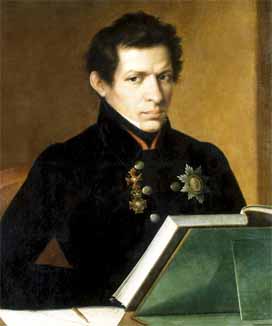
- Tuesday, February 24 = Bicentennial of the first presentation on hyperbolic geometry (Nikolai Lobachevsky, February 24, 1826).
- Tuesday, March 10 = Last day to drop without dean's permission.
- Monday, March 16 to Sunday, March 22 = Spring Break (no classes).
- Friday, April 3 = Good Friday (university closed).
- Tuesday, April 28 = Last day to withdraw from the university.
- Thursday, April 30 = Last day of classes.
- Friday, May 1 = "Study Day."
- Tuesday, May 5 = Final exam, 10:30-12:30.
ASSIGNMENTS: The following homework and due dates apply.
| Sections |
Problems |
Due Date |
Points |
1.2 Inductive and Deductive Reasoning
1.3. Axiomatic Systems
Graduate Problem(s) |
TBA |
January 24 |
TBA |
| TOTAL |
- |
- |
- |
The numbers in parentheses represent graduate student points.
Return to Bob Gardner's home page
Last updated: December 10, 2025